

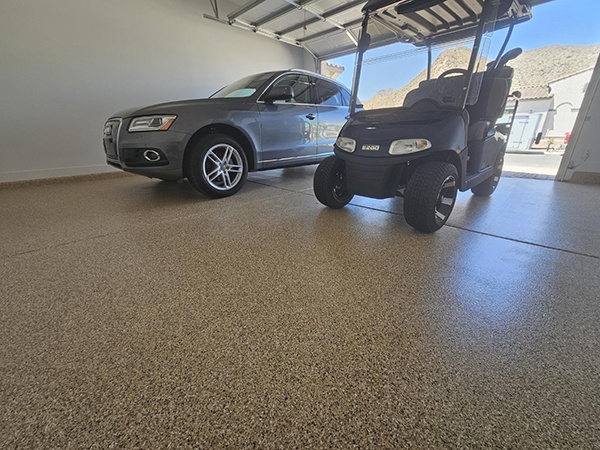
Garage floors endure constant abuse from vehicle traffic and heavy gear to oil stains, mud, and everyday grime. Without regular upkeep, the surface wears down quickly, compromising both its appearance and durability. Fortunately, maintenance isn’t complicated. A few simple habits can make a big difference. They include:
1. Sweep it Clean
At least once a week, take some time to sweep your garage floor thoroughly. Regular sweeping removes abrasive debris like sand, dirt, and small stones that can scratch coatings and wear down concrete over time.
To do this effectively, start by clearing out the garage. Remove cars, tools, boxes, and other items from the garage floor and place them outside. This ensures that you can access every inch of the entire surface.
Next, use a wide push broom to sweep it clean. If there is a lot of fine dirt on the floor, consider using a high-powered shop vacuum to pick up what the broom might have missed.
2. Deal With Stains Immediately
Sweeping the garage floor will expose all available stains on the surface. You need to tackle them soon after because stains often soak into the concrete, making it harder to remove.
Various stains require different approaches. For oil and grease stains, sprinkle an absorbent material like cat litter, sawdust, or baking soda directly onto the spill. Let it sit overnight to soak up the liquid. Then, sweep up the absorbent material and scrub the remaining residue with a stiff brush and a degreaser solution. You can also use a solution of warm water and mild detergent if you don’t have a degreaser solution. However, don’t use harsh chemicals to treat stubborn stains as they can damage the garage floor’s finish, discolor the surface, and potentially react to cause health hazards.
For rust stains, apply a cleaning agent specifically formulated for rust removal, such as trisodium phosphate or a mixture of white vinegar and lemon juice. Let it sit for ten minutes to break down the oxidation. Then scrub with a stiff-bristle brush until the stain begins to lift. Rinse thoroughly with clean water and let it dry.
Of all the stains, rust should be addressed most urgently. Rust penetrates deep into concrete and becomes increasingly difficult to remove over time. If a rust remover doesn’t fully eliminate the stain, you may need to use fine-grit sandpaper to scrape the affected area gently.
3. Fill in the Cracks
There are three common types of cracks that form on the garage floor: shrinkage, structural, and craze cracking. Shrinkage cracks are small hairline cracks that develop during the concrete curing process. They usually don’t affect the garage’s structural integrity, but can be very unsightly.
Structural cracks are larger and affect the integrity of the garage floor. You may notice uneven edges, where one side of the crack sits higher than the other. They result from foundation settlement due to freeze-thaw cycles, erosion, expansive clay soil, and poor construction.
Craze cracks are fine, superficial networks of fractures often caused by rapid drying during curing. While they don’t threaten structural integrity, they can trap dirt and moisture and make it easier for stains to soak up into the concrete.
Shrinkage and craze cracks are simpler to maintain. Start by applying a concrete etching solution (diluted muriatic acid solution mixed with water) on your garage floor. Etching exposes all the cracks and increases the adhesion of the sealant you’ll use to fill in the cracks.
Rinse the solution with clean water multiple times, let the floor dry, and then apply the sealant’s primer. Many concrete sealant kits (epoxy or polyurethane) come with a primer. The primer helps the epoxy or polyurethane stick better in the cracks.
Finally, fill the cracks with the concrete sealant. Use a putty knife or similar tool to remove air pockets while filling and also to smooth the surface.
For larger structural cracks, consider hiring the services of a licensed contractor or concrete specialist. These cracks often signal underlying issues that require more than surface-level repair. Attempting DIY fixes without properly diagnosing the root cause can lead to recurring damage and even compromise the safety and longevity of the garage floor.
4. Apply a Sealer
Once your garage floor is cleaned and all the cracks are filled, it’s time to protect it from future wear and damage with a high-quality sealer. Sealers shield against moisture, stains, chemicals, and abrasions. They also give the garage floor a subtle glossy sheen that enhances the overall appearance.
The sealers you can use include acrylic, silane, polyurethane, and epoxy. Acrylic sealers are very good at repelling oil, moisture, and other buildup that threaten the integrity and look of the garage floor. It would be ideal for you if you do automotive work in your garage space. However, it’s important to note that acrylic wears down quicker than other sealers, meaning you’ll need to reapply it after every two to three years.
Silane sealers make concrete less porous. They are often used with acrylic sealers, especially in cold climates, where freeze-thaw and salt damage are common. They last from five to ten years, depending on the level of wear and exposure to the outside elements.
Polyurethane sealers are a great option for those worried about garage floor color fading and overall durability. They are tougher than acrylic sealers, lasting up to ten years with proper care and maintenance.
Epoxy sealers are the thickest and toughest protection you can get for your garage floor. When paired with polyurethane, they provide robust resistance to fading, scratching, and cracking for up to ten years. In fact, many homeowners also use it in driveways, where traffic and exposure are high. The downside, however, is that they are slightly more expensive than all the other sealers, but they make up for that in their longevity and aesthetics.
Sealing a garage floor is something you should leave for an expert. It is an investment that will last up to ten years, so it is important to have the job done with the right tools and materials.
Not to mention, sealing a garage floor can also be dangerous. Most sealers contain high levels of volatile organic compounds, which are known to cause eye, skin, and respiratory irritation when inhaled or absorbed during application. Without proper protective gear, ventilation, and handling procedures, you can be vulnerable to these harmful effects and could experience long-term health issues.
Contact Valley Concrete Coatings & Polishing for Professional Garage Floor Maintenance
With over 20 years of experience in garage floor services and general construction, you can trust Valley Concrete Coatings & Polishing to deliver durable, high-quality results. We are fully licensed and certified, and proudly hold an A+ rating with the Better Business Bureau. Whether you want to enhance your garage floor with a custom 3D finish, upgrade to a seamless epoxy coating, or simply ensure long-term protection for your concrete, our team offers tailored solutions backed by expert craftsmanship and industry-best materials.
Call Valley Concrete Coatings & Polishing to learn more about garage floor maintenance in Phoenix.