

Concrete jobs look straightforward when you’re standing back from them. A flat slab, clean edges, and a surface that feels solid under your boots. The problems usually hide beneath the surface, where nobody sees them on day one. We’ve walked plenty of properties where the top still looked decent, but the slab sounded hollow when you tapped it. That hollow sound tells us the base gave up before the concrete ever should have. Months later, that’s when cracks start showing, corners drop, and water heads places you never wanted it.
When we look at concrete around a home in Phoenix, we’re thinking about heat, soil movement, and how water behaves after a storm. Cutting steps during the build might save time upfront, but it often creates repairs that cost far more later. Concrete doesn’t forgive shortcuts. It keeps score, and it collects payment down the road.
Prep Work Is Where Most Bad Concrete Jobs Begin
Concrete almost never fails because the top wasn’t smoothed enough. It fails because the ground underneath wasn’t ready for the job. We can spot trouble by looking at the edges first. If they’re already crumbling or dipping, the base likely wasn’t compacted right. That’s not something finish work can fix after the fact.
Good prep starts with grading and compaction, not just clearing debris. Soil in this area can be tricky. Some spots hold moisture longer. Others shift when they dry out. We’ve dug into slabs where chunks of old roots or loose fill were still mixed into the base. That material breaks down over time, leaving empty pockets. The slab settles into those pockets, creating low areas that trap water. Once water sits against concrete, it seeps into tiny cracks and widens them.
Skipping gravel or rushing compaction is a common mistake. You might not notice it right away. You notice it when the slab sinks along one side, or when a straight crack appears where the soil gave way. By then, the damage already started below the surface.
Mix Choices and Water Ratios Change Strength
Concrete isn’t one single recipe that works everywhere. A driveway that takes vehicle weight needs a different mix than a small walkway. Steps and pads often need reinforcement planned into the pour. We’ve seen slabs poured with whatever mix was cheapest that day, without considering how it would actually be used.
One shortcut we see a lot is extra water added to the mix. It makes the concrete easier to spread and faster to finish. It also weakens the slab after curing. Too much water leads to surface dusting, flaking, and early cracking. The slab might look fine at first, then start shedding its top layer. Once that surface wears down, moisture moves in and out more freely. That constant expansion and contraction stresses already weak concrete.
Even here in warmer climates, repeated wet and dry cycles take a toll. Weak concrete shows it sooner, especially along edges and corners where stress builds up.
Reinforcement and Thickness Problems Show up as Cracks
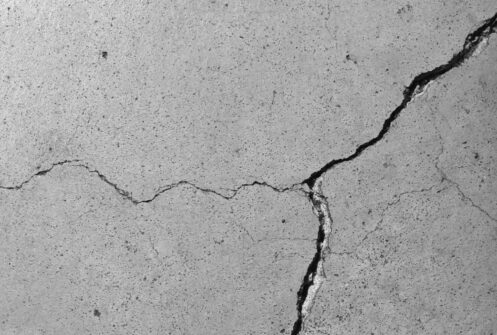
Cracks happen in concrete flooring. What matters is how they form and where they go. A properly built slab controls movement, keeping cracks tight and predictable. That’s where reinforcement and thickness come into play. Depending on the job, that might mean rebar, wire mesh, or fibers mixed into the concrete.
We’ve broken out slabs that were barely thick enough for foot traffic, let alone furniture or vehicles. Thin concrete flexes as the ground moves beneath it. Without reinforcement, that flex becomes a fracture. You might see long cracks following straight lines, which usually point back to weak support or missing reinforcement.
Handymen often skip reinforcement because it’s hidden and takes extra time. The surface looks finished either way, so the shortcut feels harmless. You see the difference later when cracks widen, edges snap off, or sections settle unevenly. That uneven surface becomes a trip hazard and a place where water collects. It also makes maintenance harder, especially if you plan to keep the concrete polished or sealed.
Drainage Mistakes Can Send Water Toward the Wrong Places
Any new concrete changes how water moves across your property. A slab that looks flat to the eye can still send water straight toward your house. We check the slope by watching how water runs after a rinse or a storm. Gravity always wins, no matter how smooth the finish looks.
When the slope is wrong, water pools near garages, steps, or foundation walls. Over time, that water erodes soil along the edges and exposes the base. Once the base starts washing out, settling follows. Standing water also stains concrete and makes it slick underfoot.
Drainage mistakes are expensive to correct because the fix usually involves cutting, grinding, or removing sections of the slab. A little planning during the pour avoids a lot of messy work later.
Curing and Timing Shortcuts Lead To Weak Surfaces
Concrete doesn’t harden because it dries. It hardens through a chemical process that needs proper moisture. When the surface dries too fast, the top shrinks while the rest cures underneath. That’s when you see spiderweb cracks and flaky patches.
Traffic timing matters too. Walking on concrete too soon can leave marks that later turn into weak spots. Driving on a new driveway early can create microcracks you won’t see until tire paths start breaking down months later. Heat and wind make this worse by pulling moisture out fast.
Cold weather brings its own risks. If concrete freezes before it gains strength, damage happens early. A licensed crew plans for these conditions and adjusts timing and curing methods to protect the slab while it sets.
Why Licensed Work Protects You Beyond the Pour
Concrete failures don’t just affect the slab itself. They can damage nearby walkways, create hazards, and change how water moves around your home. Licensed contractors bring planning and accountability to the job. We look at permits, inspections, soil behavior, and local weather patterns before the first form goes down.
A professional scope of work spells out thickness, reinforcement, base prep, joints, finish, and curing steps. That paper trail matters. If something goes wrong, you have clear expectations to fall back on. With casual work, plans change on the fly, leaving you stuck when problems show up later.
Concrete repairs usually mean removal and replacement, not quick patches. That’s why the lowest bid often turns out to be the most expensive.
Build It Right the First Time
Concrete problems rarely stay in one place. A sinking patio can affect nearby paths, and bad drainage near a slab can send water toward foundations or landscaping. We help homeowners with repairs, leveling, drainage corrections, and new installations that work with how soil and water behave on the property.
If you’re planning a concrete project or dealing with signs of a past job gone wrong, it’s worth addressing it early. Fixing the cause beats chasing symptoms later. Getting the base, mix, reinforcement, and curing right from the start saves time, money, and frustration down the line.
Contact us at Valley Concrete Coatings & Polishing today and let’s get started planning your next concrete pour.